בס״ד

גמרא · משנה ברורה

The Gemara and the Mishnah Berurah

iShtaig

A chevrusa you can talk to

Chevrusa
  • Nu, so what's the kashya?
  • Where does Rashi see that?
  • Is that the hava amina or the maskana?
  • Say it over in your own words.

או חברותא או מיתותאTaanis 23a

See it learn

It listens to you read the Gemara,keeps its finger on the place,and won't let you skip the hard part.

Read the Gemara out loud and it learns with you. It follows along word by word, explains the pshat, brings Rashi and Tosfos, pushes back on your teitch, and remembers where you got to.

Pause it, or drag the time, on the clip itself.

  1. Chevrusa

    So the Mishnah opens: from when do we say Krias Shema at night? From when the kohanim go in to eat their terumah.

  2. You

    When is that?

  3. Chevrusa

    Look at Rashi. These are kohanim who were tamei. They went to the mikveh, and once the sun has set, they can eat terumah. So it's when night comes.

  4. Chevrusa

    Now there are three shitos. Rabbi Eliezer says until the end of the first watch. The Chachamim say until chatzos. And Rabban Gamliel says until alos hashachar.

  5. Chevrusa

    And Rabban Gamliel tells his sons: if it's not dawn yet, you still have to say it.

  6. Chevrusa

    Nu, so what's bothering the Gemara? Where's the Tanna coming from, asking 'from when'? He never told us we have to say Shema at all!

That is his real voice. In the real thing, it's your voice and your amud: start right below, free. Learn free now ↓

No account needed

Learn every day, for free

The Gemara is open. Pick an amud, tap Start, and read it out loud or just talk: the chevrusa keeps the place, explains the pshat, and brings Rashi and Tosfos.

Connecting

15:00 free todayleft today

This needs the page's script: if nothing happens, sign in instead.

·

    Until tomorrow

    That's today's free learning.

    Come back tomorrow for another 15 minutes. Or make an account, which is free too: all of Shas and the Mishnah Berurah, a chevrusa that remembers you and your place, set the way you like, and all the features.

    Until tomorrow

    Make an account to keep learning

    You've learned today's free 15 minutes.

    An account is free too: all of Shas and the Mishnah Berurah, a chevrusa that remembers you and your place, set the way you like, and all the features.

    It didn't start

    Couldn't connect the voice

    Your network or filter is probably blocking the voice link.

    With an account, iShtaig has another way through for networks like that.

    • 15 minutes a day are free with no account, in Succah and Makkos. The chevrusa won't remember you from one day to the next.
    • A free account has the rest: all of Shas and the Mishnah Berurah, your place and notes, a chevrusa set the way you like, and all the features. Make an account.
    • It asks to use your microphone. Headphones help.
    • The chevrusa is AI, not a rav, and it can be wrong. More on that.
    • Nothing you say here is kept: no recording, no words, no notes. To hear and answer you, your voice goes to the same services as in any session. Privacy.

    The idea

    A good chevrusamakes you shteig.Now there's one readywhenever you are.

    When you learn alone, nobody stops you on a shaky teitch, nobody asks what's bothering Tosfos, and nobody says "nu, say it over." iShtaig is a chevrusa for the times you can't find one: before davening, late at night, on the train, between sedorim.

    It hears your reading, in Hebrew letters or in your own havara, keeps its finger on the place, and talks it through with you in English and the language of the beis medrash.

    Inside

    More than a chevrusa:a whole beis medrash.

    1 of 8

    Learn

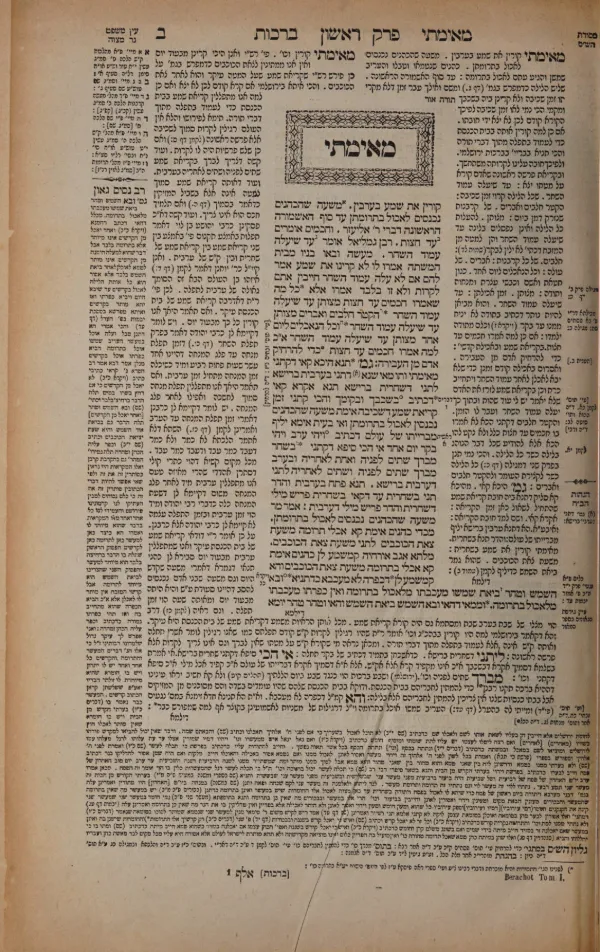
    Any amud, the way it looks in your Gemara, with Rashi and Tosfos at the side.

    Berachos 2a on iShtaig, laid out as a page of Gemara, with the chevrusa beside it
    2 of 8

    The beis medrash

    See who's learning now, sit at a table, find someone to learn with.

    The beis medrash: tables, seats, and lamps lit where someone is learning
    3 of 8

    The Heichal

    Shiurim, live. Walk in and listen, or give one yourself.

    The Heichal: a hall of doors, a live shiur behind each open one
    4 of 8

    Chats

    Talk with your chaverim, call them, learn an amud together.

    Chats with two chaverim, side by side
    5 of 8

    The board

    Divrei Torah from the chaverim, each one checked before it goes up.

    The board: notes from chaverim, put in a wall of stone
    6 of 8

    Masmid Central

    Your week, the beis medrash's week, the Masmid of the Week.

    Masmid Central: the week's learning, and the Masmid of the Week and of the Month
    7 of 8

    Chevrusa Kingdom

    An old map of Eretz Yisrael. Tap a place and it shows where the Gemara speaks of it.

    Chevrusa Kingdom: a map of Eretz Yisrael, with the Gemara's words about Shiloh open beside it
    8 of 8

    The Mishnah Berurah

    A siman at a time, learned the same way.

    A siman of the Mishnah Berurah on iShtaig

    Swipe, or tap the arrows, to see more

    Features

    Everything inside,in plain words.

    A chevrusa to talk to, the seforim to learn from, and chaverim to learn with. Here is what's in it today.

    The chevrusa

    A voice that learns with you.

    • It hears you read. Read out loud, and a yad on the screen stays on the word you're up to.
    • It talks it through. The pshat, why the Gemara asks, what Rashi adds, where Tosfos argue. Then: "nu, say it over."
    • You set its personality. How much it talks, whether it explains or makes you work, how it corrects, stories or only the text.
    • Your havara. Yeshivish or Israeli pronunciation, and as fast or slow as you like.
    • It draws. Ask what something looks like, and it draws you a diagram.
    • It teaches reading. If you want it to: the Hebrew, and Rashi script letter by letter.
    • No made-up sources. It's built to quote a sefer only when that sefer is open in front of it.

    The seforim

    The whole shelf, open to any page.

    • All of Shas. Every masechta of the Bavli, amud by amud, from the Vilna Shas.
    • Rashi and Tosfos at the side of every amud, and the Maharsha on six masechtos.
    • The Mishnah Berurah. All of Orach Chaim, with the Shulchan Aruch, the Biur Halacha and the Shaar HaTziyun.
    • Three ways to see it. Laid out like the page in your Gemara, line by line with English, or the old print itself.
    • Words to know. The Gemara's own words on each amud, explained a tap away.
    • Rashi letters or plain. Rashi and Tosfos in Rashi script, or in square letters if that's easier.
    • Your place is kept. Where you left off in each masechta, notes of every session, your minutes and your streak.

    Chaverim

    People to learn with.

    • The beis medrash. See who's learning now, sit at a table, ask someone to learn.
    • Learn together. A chaver joins your amud by voice, with cameras if you both want. The chevrusa answers when you turn to it.
    • Chats and calls. One chaver or a group, with a call one tap away.
    • Shiur rooms. Give a shiur or sit in on one, and raise your hand to ask.
    • Mail. A letterbox of your own at ishtaig.com, for letters and cards between chaverim.
    • The board. Divrei Torah pinned up for the whole beis medrash.
    • Masmid Central. The week's learning, and the Masmid of the Week.
    • Dedications. Learn l'iluy nishmas or for a refuah shleimah, alone or with chaverim toward a siyum.

    Built for a frum home

    Guarded, and yours.

    • Checked first. Messages, letters and posts pass a moderator before anyone sees them.
    • Only chaverim you accept. Chats, calls and letters are with people who accepted you, and nobody else.
    • Private by default. Nobody is shown your email address, and what you learn is shared only if you choose.
    • Clean language. A delicate sugya is said in the Gemara's own words, not in blunt English.
    • Works on filtered internet. Where a filter blocks live calls, the voice comes through ishtaig.com itself.
    • On your phone. Add it to your Home Screen, and calls and messages reach you when it's closed.
    • A chevrusa, not a rav. It doesn't pasken, and it tells you so.

    How it works

    1. 1

      Pick your amud

      Choose a masechta and an amud, or a siman of the Mishnah Berurah. It remembers where you left off on each one.

    2. 2

      Read it out loud

      In Hebrew or in your own havara. A yad follows along on the screen as you read.

    3. 3

      Talk it through

      It explains, asks, argues and brings the mefarshim. You decide how much it talks, corrects and jumps in.

    4. 4

      See your learning

      Each session's notes, your minutes and your streak, and the amudim you've covered.

    On the shelf

    4,900+
    amudim of Gemara
    118,000+
    Rashis
    25,000+
    Tosfos
    697
    simanim of the Mishnah Berurah

    Know what it is

    A chevrusa,not a rav.

    The chevrusa on iShtaig is AI: a computer program, not a person. It's here to learn with you. It is not a rav, a posek or a rebbi, and it doesn't take their place.

    • It can be wrong. It can mishear you, mistranslate a word, miss the pshat or mix up who says what, and sound sure of itself all the while. Treat it like any chevrusa: ask where it sees that, argue with it, and look inside.
    • It doesn't pasken. Nothing it says is a psak, even when you learn the Mishnah Berurah with it. What to do l'maaseh is a question for your rav.
    • The text can have mistakes too. The Hebrew was transcribed and the English written by iShtaig, with AI, from the old prints. A word can be off. The print itself is there to check against: where the two differ, go by the print.
    • It's no substitute for learning with people. A rebbi, a shiur and a chevrusa of flesh and blood give what no program can. iShtaig is for the times you'd be learning alone.

    Heard something off? Tell it so, or mark its line "that was off": that's how it gets better. iShtaig works to get things right, and can't promise it always does.

    Who's behind it

    The chevrusa is AI.The people behind it aren't.

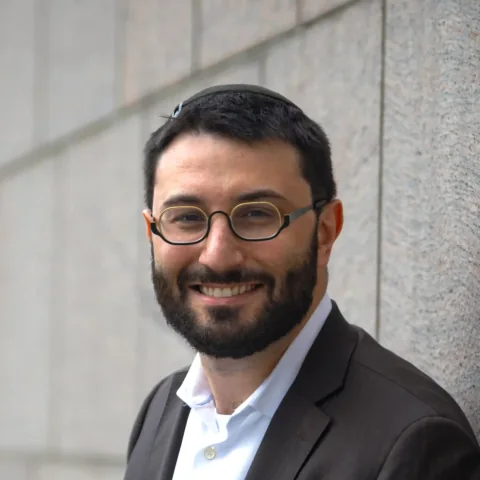
    Alejandro Fiszman

    Alejandro Fiszman

    Created iShtaig

    A tax litigator in Ottawa who became a baal teshuva at 25 and needed to find a way to learn. iShtaig grew out of that need.

    His partner

    Anonymous

    אין הברכה מצויה אלא בדבר הסמוי מן העין"Blessing is found only in what is hidden from the eye." Taanis 8b

    About iShtaig →